
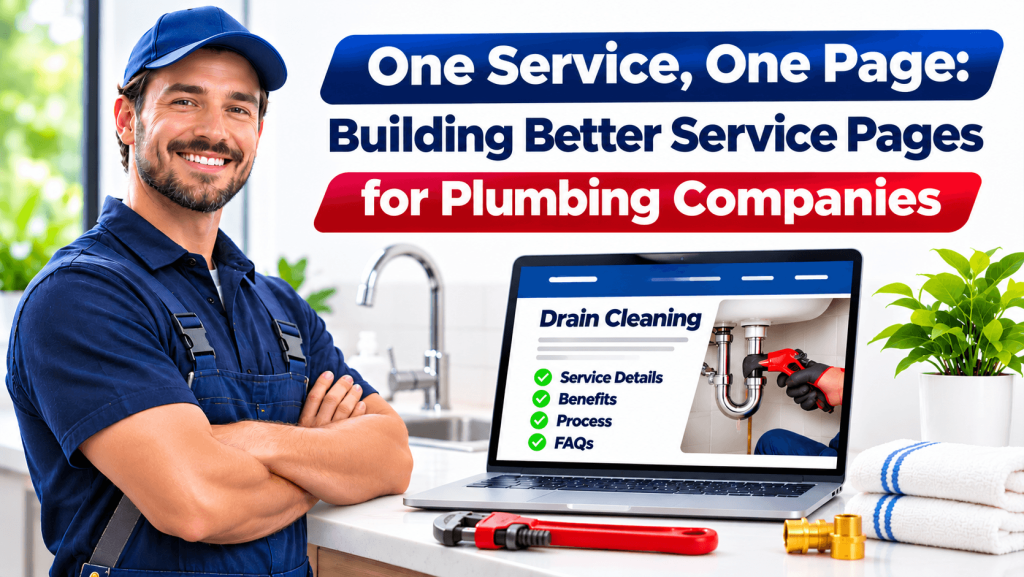
A homeowner in Sacramento searches for tankless water heater installation and lands on a plumbing company’s website. The only relevant page lists twenty services in a single paragraph, from drain cleaning to gas lines, with no details about water heaters. She leaves and finds a competitor with a dedicated tankless water heater page explaining options, typical timelines, and what affects the cost.
Specific service pages help customers find answers quickly and help search engines understand exactly what you offer.
Why Dedicated Service Pages Help
When each major service has its own page, a visitor searching for that service lands on content that matches their need. It’s easier for them to decide whether you’re the right fit, and easier for search engines to connect the page with relevant searches.
A single combined page tends to be thin on every topic. Customers with specific problems, such as a slab leak or a sewer line replacement, want to know you handle that exact job.
What Each Service Page Should Include
A strong service page answers the questions customers ask before they call:
- A clear headline naming the service, such as sewer line repair
- Common signs a customer needs the service
- What the process looks like, from inspection to cleanup
- Factors that affect cost and timing, with ranges if you’re comfortable sharing them
- Licensing, warranties, and any permits typically involved
- A clear call to action with your phone number and booking options
Add photos from real jobs and answers to common questions about that service. Original details from your own work make each page more useful than generic descriptions.
Connect Service Pages to Profiles and Listings
Link each service page from your main menu and, where possible, from the services section of your Google Business Profile. Customers who click from search results or a listing should land on the page that matches their need, not just your homepage.
Directories benefit from the same clarity. A general directory such as Business Listing Hunt includes a Plumbing and Plumbers category where homeowners compare local plumbers, and it shows how others present their specialties. In your listing description, name your main services specifically rather than writing all plumbing services.
A common mistake is creating dozens of near-identical pages for minor variations. Focus on the services customers actually search for and the work you want more of.
Match Every Search to the Right Page
Focused service pages help customers find the help they need and give them the confidence to call. Build pages for your core services, fill them with real details, and keep your profile and listings, including on Business Listing Hunt, pointed to them.
Frequently Asked Questions
How many service pages should a plumbing company have?
Create pages for your main services and the jobs you most want to win, often between five and fifteen for a typical residential plumber. Combine closely related tasks on one page rather than splitting them unnecessarily, and add new pages when you introduce a service or notice frequent customer questions about one.
How long should a service page be?
Long enough to answer the questions customers ask before they call, often several hundred words with headings, photos, and a short FAQ. Avoid padding pages with filler. A focused page that clearly explains the service, process, and next steps works better than a long, repetitive one.
Should service pages include prices?
Sharing typical price ranges or explaining what affects cost helps customers plan and filters out poor-fit inquiries. Many plumbers note that final pricing depends on an inspection. If you list prices, keep them current and make sure they match what your team actually quotes in the field.
Can we reuse manufacturer descriptions on service pages?
It’s better to write your own. Manufacturer text often appears on many websites and doesn’t describe your process, experience, or warranty. Use product specifications as a reference, then explain the service in your own words, including how your team handles installation and follow-up.